
Recycling Success Story: PET's Earth-Friendly Track Record
In an era when environmental sustainability is paramount, PET (polyethylene terephthalate) plastic water bottles stand out as a great example of innovative and responsible packaging. These versatile containers boast an impressive recycling record that demonstrates the actions beverage manufacturers are taking to reduce their environmental footprint. Far from the problem they are often portrayed as by some environmental activists, PET bottles are not only safe for food contact (for more than 50 years) but are also engineered for recyclability, contributing to a circular economy that minimizes waste and promotes energy efficiency by reusing valuable resources instead of creating new plastic.
Let's delve into the data that highlights why PET water bottles are contributing to sustainability and debunk some myths as we go.
100% recyclable
There's a well-established fact about PET plastic water bottles: they're 100% recyclable, making them one of the most eco-friendly packaging options available. Unlike many other materials, PET is among the easiest plastics to recycle, with a U.S. PET bottle recycling rate of 30.2% in 2024. That's significantly higher than the overall U.S. plastics recycling rate, which hovers around 8–9%, according to a recent estimate by the U.S. Environmental Protection Agency.
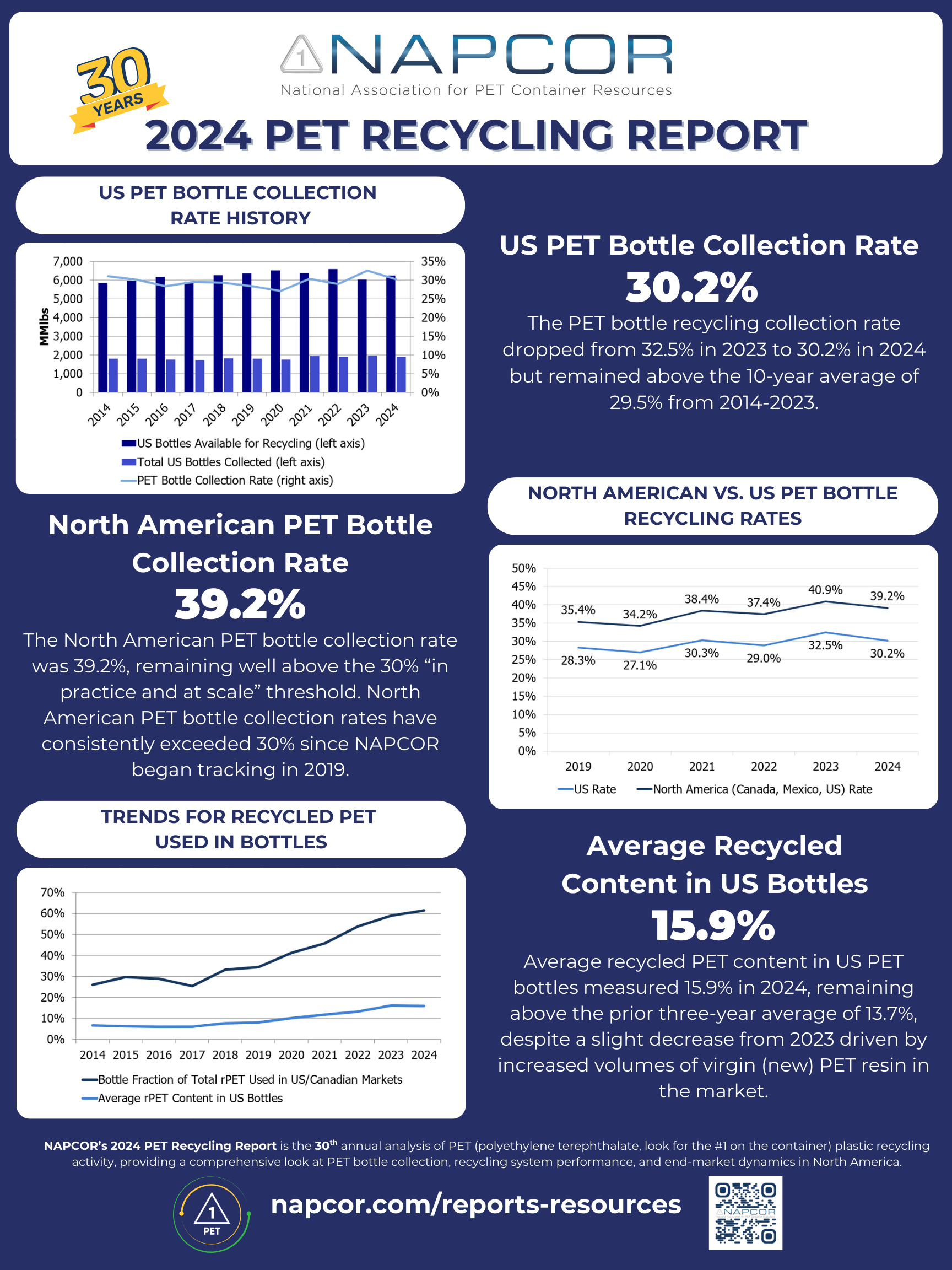
In curbside recycling programs across the U.S., the PET water bottle containers make up 50% of all PET bottles, underscoring the material's role in driving higher recycling volumes and proving that hydration choices can align with planetary as well as human health.
Environmental benefits: undeniable
These high recycling rates yield important environmental benefits. Producing new products from recycled PET (rPET) requires two-thirds less energy than using virgin materials, while also cutting greenhouse gas emissions. To put this in perspective, recycling just one plastic bottle conserves enough energy to power a 60-watt light bulb for up to six hours. Moreover, PET water bottles constitute only about 0.92%—just a fraction—of the plastic produced domestically in the U.S.
This minimal footprint challenges misconceptions about plastic, showing that PET bottles are valuable resources, able to be transformed when recycled into new bottles, clothing, carpets, sleeping bags, take-out containers and more—turning potential waste into everyday essentials.
Industry initiatives further elevate PET's sustainability potential. Bottled water companies have pioneered light-weighting, which dramatically reduces the material used in each bottle. Today, the average weight of a 16.9-ounce PET bottle is just 8.3 grams, which is almost 1/3 the weight of a soda bottle (22.2 grams)
This efficiency not only conserves resources but also lowers transportation emissions due to lighter loads. Many producers now incorporate 50%, 75%, or even 100% rPET into their bottles, fostering a more circular system where recycled materials become the norm. Larger bottled water containers , like 3- and 5-gallon bottles, are reused as many as 50 times before recycling, extending their lifecycle and amplifying their benefits.
Recycling is easy
Accessibility plays a crucial role in this success. Importantly, 91% of U.S. households have access to curbside or drop-off recycling programs, making it easier than ever to participate. Compared to alternatives like aluminum cans or glass, PET requires less energy to produce and is lighter, enhancing consumer convenience without compromising recyclability or container safety. These advantages position PET as a superior choice for on-the-go hydration, where portability and environmental stewardship intersect.
Conclusion
The recycling achievements of PET water bottles are a testament to innovation, efficiency, and environmental dedication. By embracing the use of rPET to create new bottles, we reduce the need for virgin plastic. Essentially, the bottled water industry has turned a simple and convenient container into a model of circular economy principles. Consumers can sip confidently, knowing their choices support a greener future.